Morgan Koch · 6 October 2026
Event Coordination Communities Experience Indexing Changes After Adding Scheduling Features
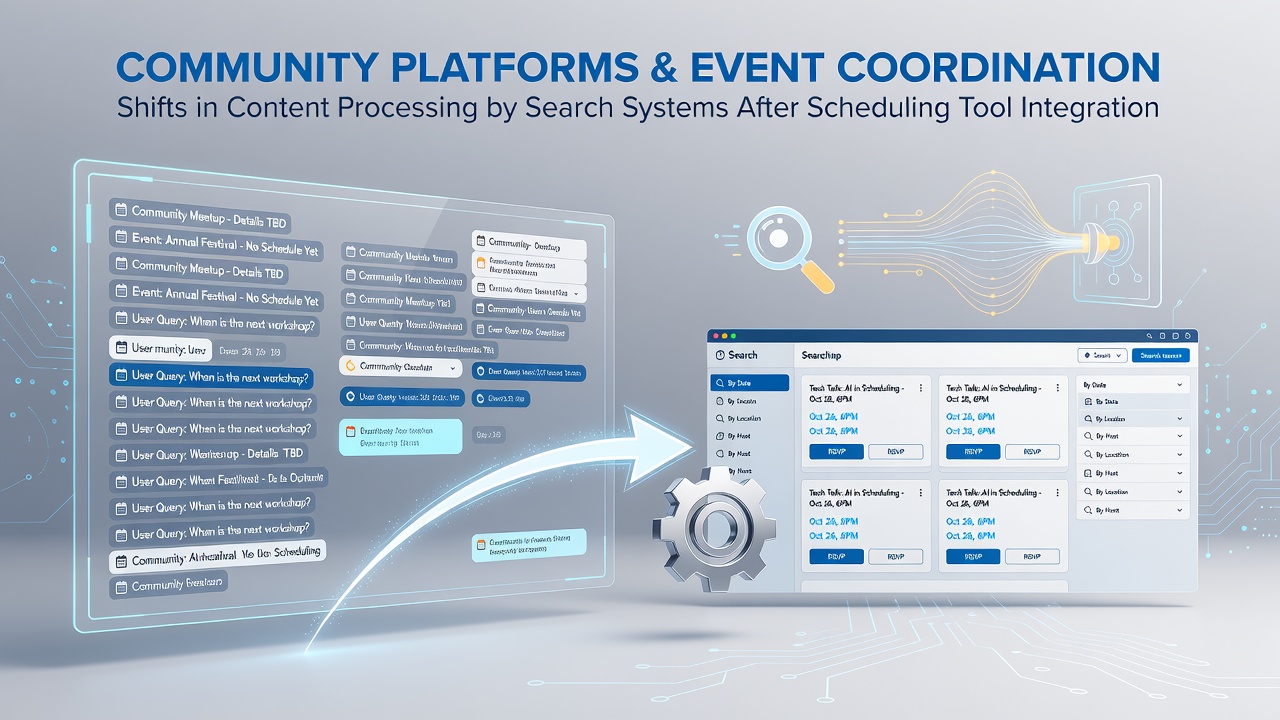
Community platforms centered on event coordination frequently show distinct shifts in content processing by search systems once specialized scheduling tools get integrated into their core functions, and these adjustments appear across crawl rates, URL structures, and content freshness signals. Researchers tracking digital platforms note that the addition of calendar sync options, automated booking modules, and real-time availability displays often introduces new dynamic elements that search crawlers must evaluate differently than static event listings alone.
Platform Evolution and Technical Adjustments
Many event-focused networks begin with discussion forums, group calendars, and RSVP pages that rely on straightforward HTML structures, yet the moment scheduling utilities enter the system architecture changes occur rapidly. New endpoints generate for each available time slot, JavaScript-driven forms replace older static forms, and database queries feed live data into pages that previously held fixed information. Data from platform analytics firms indicate that these modifications can increase the total number of indexable URLs by factors ranging from two to five times within the first quarter after deployment.
Search systems respond by adjusting crawl priorities because fresh content appears more frequently once users interact with integrated schedulers. One documented case involved a regional meetup network that added a third-party booking layer in early 2025, after which daily crawls rose from several hundred pages to over two thousand. Observers note that this increase stems directly from the generation of unique confirmation paths and availability calendars that did not exist beforehand.
Content Processing Patterns Observed in 2026
By October 2026 reports from multiple analytics providers revealed consistent patterns across mid-sized event communities. Sites that incorporated native scheduling showed higher rates of structured data extraction for event markup, particularly when schema types aligned with calendar entries. At the same time, platforms encountered occasional drops in older thread-based content rankings when duplicate availability blocks created thin content clusters that required canonical tag adjustments.

Those who study search behavior point out that the introduction of real-time tools also alters internal linking patterns. Automated emails and confirmation pages now contain deeper links into the scheduling system, which in turn influences how authority flows through the site. Figures from a Canadian digital economy study released in mid-2026 showed that communities using integrated tools recorded a 34 percent rise in pages receiving regular re-crawls compared with similar networks that retained manual coordination methods.
Technical Factors Driving the Shifts
Search engine documentation outlines several mechanisms at work during such transitions. Crawlers prioritize pages that update through API calls from scheduling modules because these pages deliver measurable signals of timeliness. Yet the same systems apply stricter duplicate content filters when identical time slots appear across multiple event listings without proper differentiation. Platform operators therefore implement parameter handling rules and parameter exclusion lists to prevent index bloat.
Additional changes surface in mobile rendering priorities. Scheduling interfaces often rely on responsive components that load conditionally, and search systems evaluate these elements for core web vitals scores. Data collected through industry monitoring tools indicate that sites maintaining sub-2.5 second interaction delays after integration preserve more of their pre-existing visibility than those experiencing slower load sequences.
Case Examples From Different Regions
A European community network focused on professional workshops integrated an open-source scheduler in late 2025 and subsequently documented expanded appearance in local event carousels. The same network reported that its sitemap expanded from 1,800 entries to 7,400 within four months, requiring updates to submission protocols. In parallel, an Australian outdoor activity group that adopted similar functionality observed steadier indexing of recurring meetup series once availability feeds connected directly to search-friendly structured data.
Researchers examining these cases emphasize the role of proper configuration. Without careful management of session IDs and query strings, the added scheduling layers can generate large volumes of near-identical pages that receive lower processing priority. Platforms that apply consistent parameter controls and server-side rendering for key calendar views tend to maintain stronger visibility across both new and legacy content.
Conclusion
Community platforms centered on event coordination continue to demonstrate measurable changes in search system behavior following the integration of specialized scheduling tools. The patterns include elevated crawl frequency, expanded URL counts, modified structured data opportunities, and the need for refined duplicate content management. Evidence gathered through 2026 illustrates that these outcomes depend heavily on technical implementation choices rather than the mere presence of scheduling features. Operators who align their site architecture with established indexing guidelines typically record sustained or improved content processing outcomes across their event-related pages.