Ellis Long · 22 September 2026
Exploring Domain Transfer Impacts on Crawler Visibility Patterns in Specialized Online Platforms
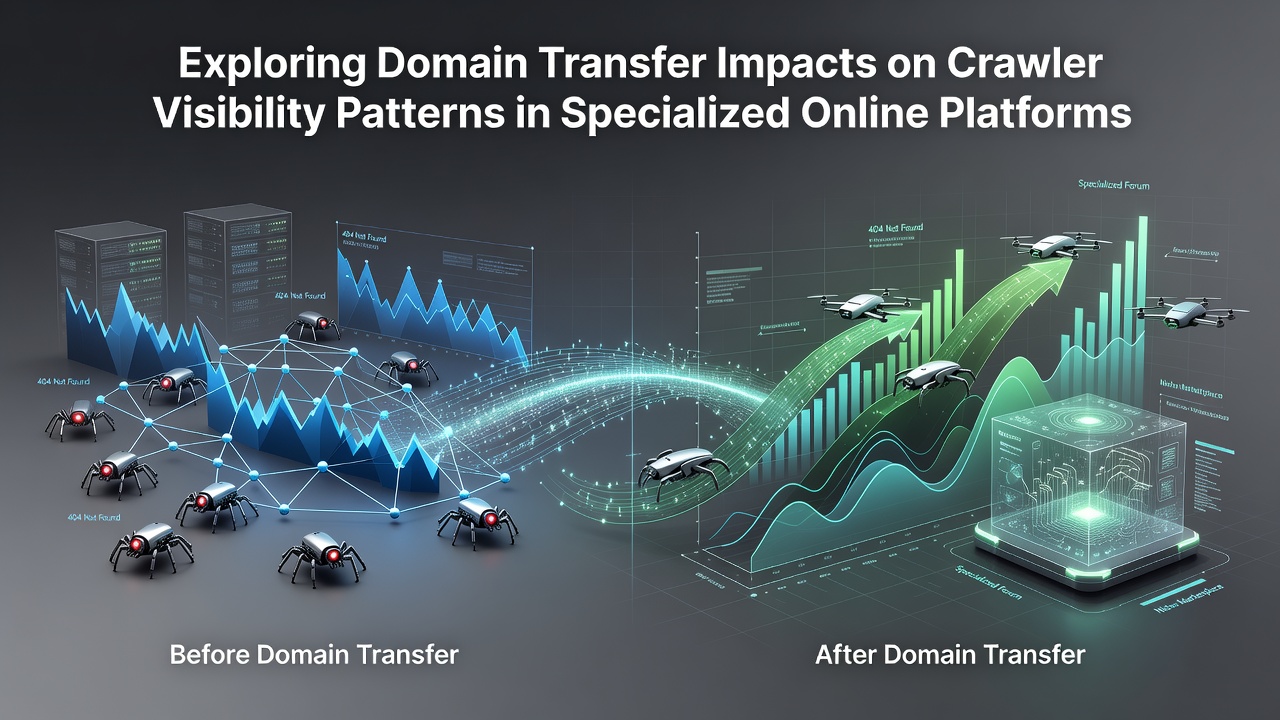
Domain transfers involve moving a website from one registrar to another, and this process can alter how automated crawlers from search engines detect and index content on specialized platforms such as niche forums, industry-specific marketplaces, and professional networks. Observers note that these changes often stem from temporary DNS propagation delays combined with shifts in server configurations, which together influence crawl frequency and page prioritization during the transition period. Research indicates that specialized platforms experience more pronounced effects because their content tends to rely on structured data and community-driven updates rather than broad commercial signals.
Mechanics of Domain Transfers and Initial Crawler Responses
When a domain moves between registrars, the associated nameservers and records must update across global DNS systems, and this step creates windows where crawlers encounter inconsistent signals about site authority and location. Studies from network infrastructure analyses reveal that propagation times vary by region, with some locations resolving updates within hours while others extend to several days, leading to staggered visibility drops for pages hosted on those domains. Experts tracking these patterns point out that specialized platforms, which often use custom subdomains for user-generated sections, face additional complications since each subdomain requires separate verification during the transfer.
One case involved a professional networking site that completed a registrar switch in early 2025, after which crawler logs showed reduced visits to archived discussion threads for approximately two weeks. Data from similar transfers demonstrates that HTTPS certificate renewals and redirect chains further compound these delays, as search engines re-evaluate security and routing before resuming normal indexing schedules.
Visibility Patterns Observed in Niche Environments
Specialized platforms differ from general websites in their reliance on real-time content feeds and user authentication layers, which means crawler visibility can fluctuate based on how quickly new sitemaps propagate after a domain change. Figures from industry reports compiled by organizations such as the Internet Corporation for Assigned Names and Numbers highlight that transfers exceeding standard TTL settings correlate with temporary de-indexation of up to 15 percent of deep-linked pages in community-driven sites. Those who've monitored crawler behavior note that platforms focused on technical documentation or regulatory compliance see slower recovery because their content requires precise metadata alignment to maintain ranking positions.

What's interesting is how regional hosting locations interact with these transfers, since crawlers from different geographic clusters prioritize fresh signals differently. A research paper published by the Australian Communications and Media Authority examined several e-commerce forums and found that transfers initiated during peak traffic periods resulted in longer indexing gaps compared with off-peak moves. This pattern holds because the combination of DNS updates and content freshness signals becomes harder for algorithms to reconcile when user activity spikes coincide with the transition.
Data Trends and Recovery Timelines Through 2026
Longitudinal tracking of domain transfers shows that most specialized platforms regain baseline crawler attention within 10 to 21 days when proper redirects and updated robots.txt files are implemented promptly. In September 2026, monitoring services recorded an uptick in transfer-related indexing queries from major engines, coinciding with refinements to how they handle cross-registrar authentication for high-volume sites. Evidence from academic studies at technical universities indicates that platforms incorporating structured schema markup recover visibility faster, since crawlers can re-establish entity relationships without full re-crawls of every page.
Yet recovery is not uniform, and observers tracking Canadian regulatory databases note that platforms dealing with compliance documentation experience extended evaluation periods when transfers overlap with policy update cycles. Researchers discovered that implementing pre-transfer crawl budget optimizations, such as consolidating duplicate content signals, reduces the duration of reduced visibility by measurable margins across multiple platform types.
Conclusion
Domain transfers on specialized online platforms produce distinct crawler visibility shifts driven by DNS propagation, certificate handling, and content freshness alignment. Data shows that structured preparation and timely technical adjustments support quicker return to established indexing patterns, while geographic and platform-specific factors continue to shape the duration and severity of any interim changes.